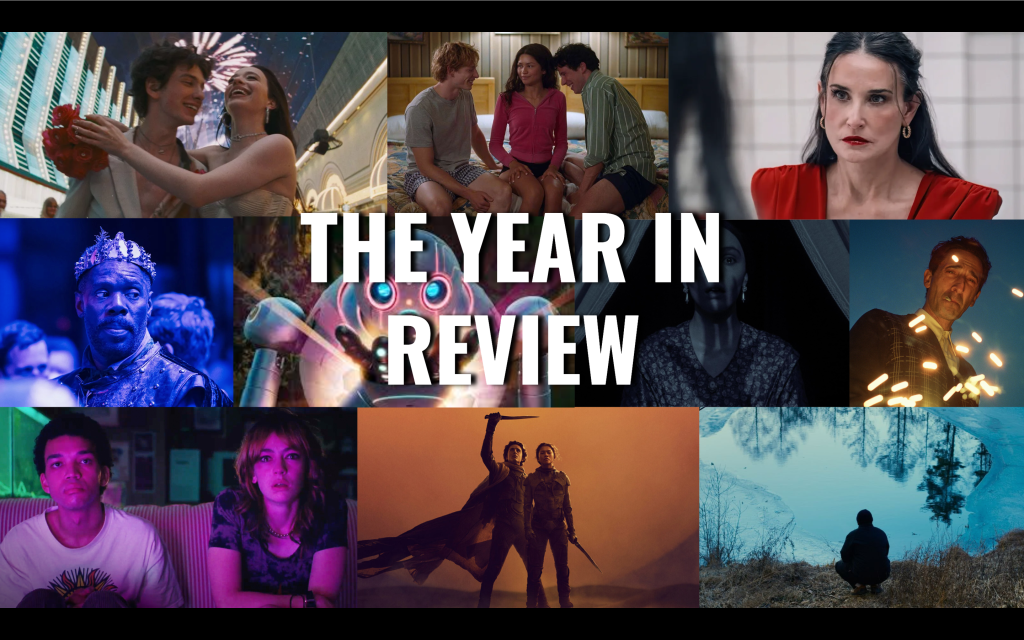
2024 in film was emblematic of the struggles the entertainment industry has recently faced. Delays in production and development caused by the historic and necessary dual-strike in 2023 (a year which I consider to have an excellent film slate, ironically) have led to a set of films in 2024 that I’ve had to sift through more thoroughly to find the ones that really rise to the top. But inevitably, there is always beautiful work to discover each year, made possible by creatives both above and below the line.
As we enter into an already embattled 2025, I want to take a moment to reflect on the importance of film as an art. Art spurs ideas, provocation, and vitality to culture, which is why it’s more essential than ever as Los Angeles, and our country, grapples with uncertainty and tragedy. Any story worth telling should have ideas that challenge our preconceived notions about our society and ourselves.
The films on this list embody these challenging themes: class disparity, the failures of capitalism and the American Dream, identity. And above all, they demonstrate the ways that art can provoke conversation and expound upon our understanding of genre and entertainment.
Here are my Top 10 films of 2024:
Honorable Mentions: Hitman, Babygirl, The Wild Robot, Didi, Twisters, Juror #2
10. A Different Man
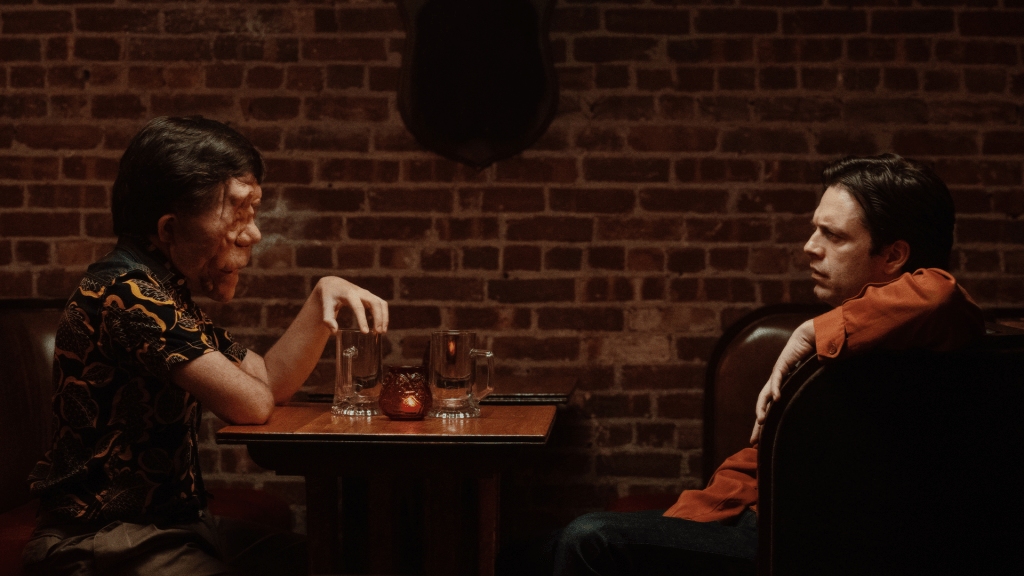
My number 10 spot is somewhat interchangeable with the honorable mentions listed above, and because it’s such a close ranking, I thought about which film deserves to be spotlighted on this list. Director Aaron Schimberg’s offbeat, dark comedy A Different Man was the only answer.
Edward (Sebastian Stan) is a struggling actor with neurofibromatosis, a condition which affects his face. As he struggles with his self-esteem, he forms a bond with his new neighbor Ingrid (Renate Reinsve), an aspiring playwright, and eventually decides to undergo an experimental procedure that alters his appearance. Things seem to turn around for Edward as he assumes a fully new identity, but with the arrival of Oswald (Adam Pearson), a charismatic man with the same facial condition Edward previously had, Edward’s new life begins to spiral.
I had the privilege of attending a screening and Q&A for Schimberg’s previous film, Chained for Life, at the 2019 Wisconsin Film Festival — a film that also co-starred Pearson. Schimberg has a unique ability to excavate deep humanity within genre-challenging stories. Through Edward’s fracturing sense of reality and self, he shows us that no amount of external validation can make up for how we view ourselves.
9. I Saw the TV Glow
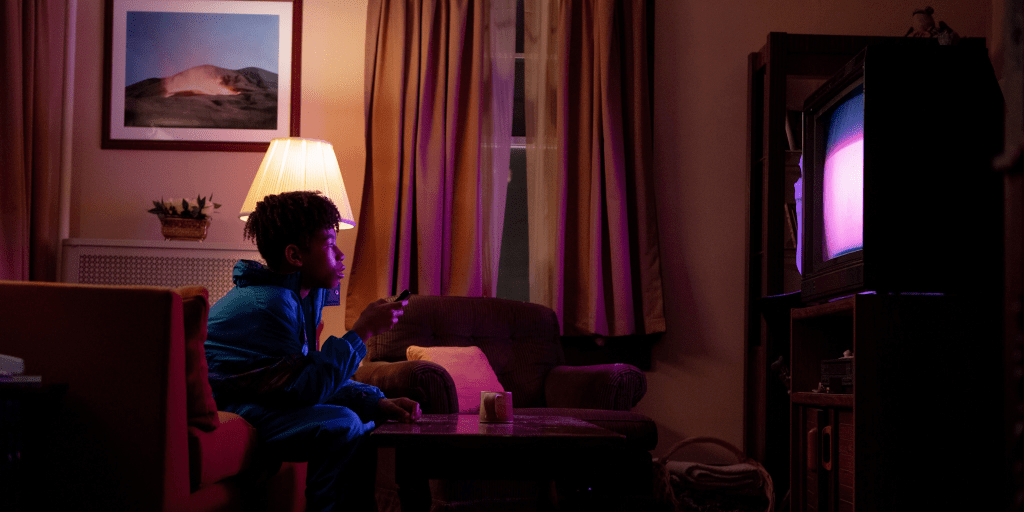
I didn’t know if I Saw the TV Glow would make my list, but something about it has stuck in the back of my brain. It’s the only film I specifically rewatched for this list, and I’ve found that director Jane Schoenbrun’s story has only further ensured its place as one of the best films of the year.
Owen (Justice Smith), a kid living in an eerie suburpia, is introduced to a supernatural teen show called “The Pink Opaque” by his classmate and unlikely friend Maddie (Jack Haven). The longer he watches, the more Owen feels that this show is more real than his actual life. To that end, I Saw the TV Glow becomes a story within a story, with recognizable cultural touch-points to latch onto. The best way I can describe the aesthetic of these concurrent narratives is if Buffy Summers starred in “Are You Afraid of the Dark?” and the people who watched that show lived in Twin Peaks. If that sentence makes no sense, that’s okay. What I’m getting at is how Schoenbrun masterfully refracts the collective nostalgia of a generation into a resonant identity study — specifically trans identity, as Owen becomes drawn to “The Pink Opaque” like a lifeline within this story, but this broader theme is still relatable for anyone watching.
How we fill our time — watching television, going to the movies, writing end-of-year film review lists — is a refraction of who we are and what stories speak to us. “Buffy the Vampire Slayer” and “Twin Peaks” are both significant to me for different reasons — perhaps more so at the time of this writing, given that I’m currently rewatching the former, and David Lynch, creator of the latter, has just passed away. Stories like this are indelible, and I Saw the TV Glow captures this same poignancy.
8. Nosferatu
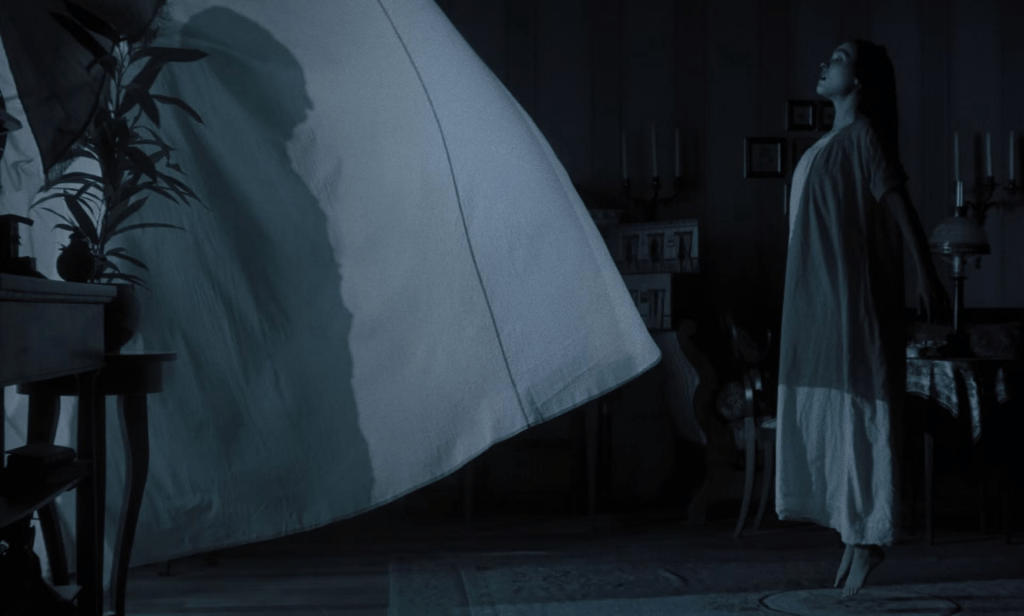
I may have some bias when it comes to Nosferatu, having worked on its marketing campaign, but I believe director Robert Eggers’ modern take on FW Murnau’s 1922 German expressionist film (with elements of Bram Stoker’s “Dracula”) is extremely effective as a modern folktale, as well as a fundamental exploration of good and evil.
We first see Ellen (Lily Rose-Depp) emerge from total darkness, her eyes wet with tears, her hands clasped, praying for a “guardian angel” to come to her. But as VE Schwab similarly warns us in her novel “The Invisible Life of Addie LaRue” — never pray to the gods who answer after dark. Indeed, the malevolent force known as Nosferatu (Bill Skarsgård, aka Count Orlok) answers Ellen’s plea, his pull on her equal parts horrifying and seductive.
While Nosferatu contains the broad beats of a “Dracula” story, Eggers’ slow-burn approach creates a mounting sense of tension, luxuriating in stunning shots that hypnotize us as we get closer and closer to the dark. As Ellen fights against her connection to Orlok, the bond threatens to possess her entirely. Throughout this, Depp delivers an all-time physical performance that recalls Linda Blair’s Regan from The Exorcist. It’s a shame she isn’t a contender in the Supporting Actress race this year, because what she accomplishes is disturbing and awe-inspiring. Similarly, Skarsgård gives a new definition to “disappearing into a role.” Any trace of his humanity is extinguished in Orlok’s menacing, decrepit form.
We are propelled to their inevitable meeting, where Ellen must confront the darkness in herself before it consumes those she loves. It’s an effective, emotional trope that always works on me in my favorite novels, and it certainly works on me here. All of this culminates in my favorite ending — and final shot — of the year.
7. Nickel Boys
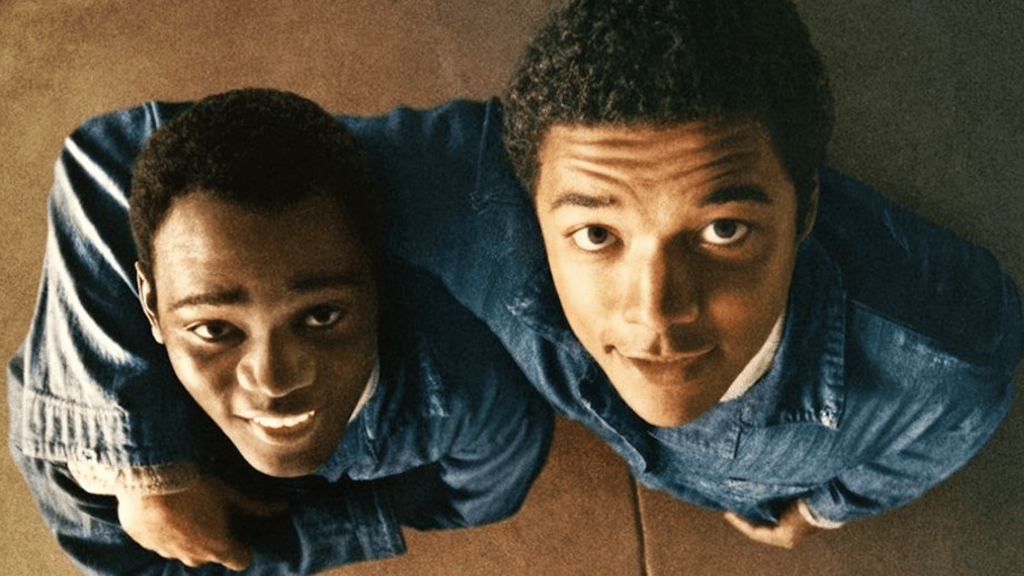
In these end-of-year lists, I’ve written often about films that sink into my bones, that linger in my brain or haunt my thoughts, demanding attention. Nickel Boys is beautiful and harrowing, form-breaking and intimate. It’s a stunning narrative debut from director RaMell Ross, and a reminder that contemporary filmmaking can still surprise us.
Based on Colson Whitehead’s novel, Nickel Boys follows Elwood’s (Ethan Herisse) time at Nickel Academy, a Jim Crow-era reform school, following a conviction for a crime he didn’t commit. There, Elwood befriends his fellow classmate Turner (Brandon Wilson), and through this deep bond they struggle together to endure the abuses of the academy, hoping for a way out. We also see non-linear glimpses of an adult Elwood (Daveed Diggs), where the shadow of Nickel Academy still hangs over his memories.
Ross employs a specific perspective in his visual storytelling (which I won’t spoil here) that elevates what could have been an expected narrative to reveal the souls of these characters — their hopes, their deep fears, and the connections that keep them buoyed. The injustices Elwood and Turner endure are immediately visceral and personal to watch. This overt choice still very much follows function, not the other way around, expanding the boundaries of form within narrative storytelling. Ross reaches instant auteur status with this audacious swing of a film.
6. Evil Does Not Exist
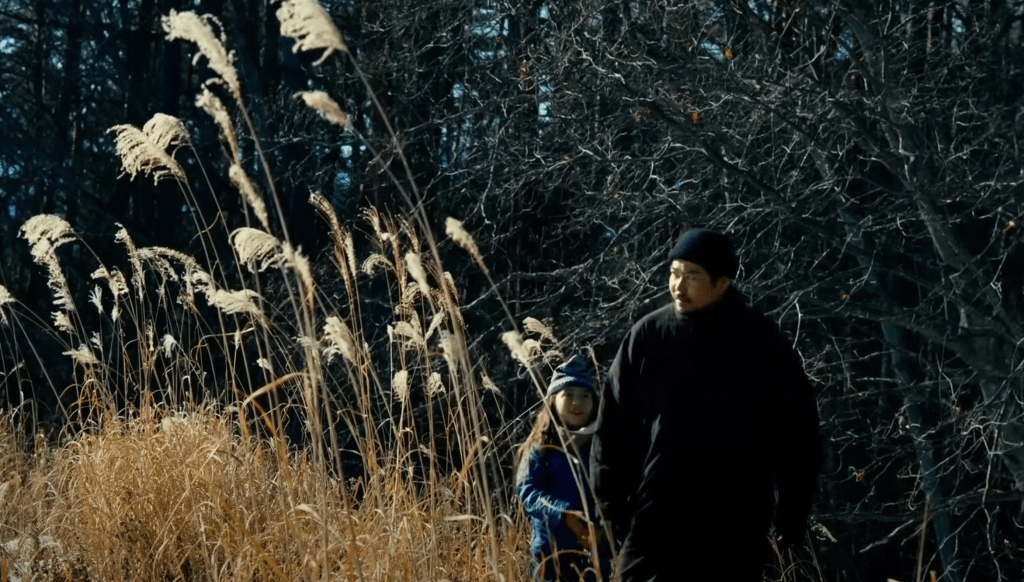
I was curious about Evil Does Not Exist for a while — both because of its provocative title, and because it’s director Ryusuke Hamaguchi’s follow-up to 2021’s Drive My Car. Like his prior film, Evil Does Not Exist is meditative and understated in its approach, but something more insidious lies underneath this work, peeling back slowly to a disconcerting, uneasy conclusion.
Originally conceived as a 30-minute short-film to accompany composer Eiko Ishibashi’s haunting score, the film surrounds us with its atmosphere, setting the tone with a five-minute overture of sorts in which we slowly soar over trees in the winter before we’re ever introduced to our characters. A story then emerges about a Japanese village being threatened by the development of a new “glamping” (glamour-camping) site, and the ecological and existential impact it poses on the people living there. Takumi (Hitoshi Omaka), the town’s jack-of-all-trades, and his young daughter Hana (Ryo Nishikawa), become two of our key figures amid this unfolding development.
Evil Does Not Exist is less a film to watch and more one to experience. There are, of course, clear themes of gentrification or the collision of corporate greed with the working class, but the deeper takeaway is Hamaguchi’s visual poeticism that steeps us in the emotional state of Takumi and the villagers. The question implied in the film’s title is ultimately rhetorical; evil is a human-made concept.
5. The Brutalist
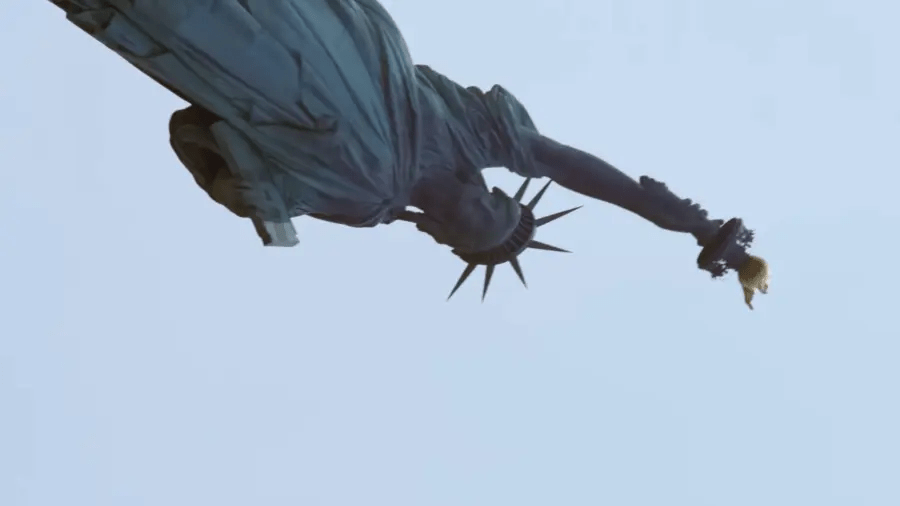
The American Dream is predicated on the idea that everyone has the opportunity to succeed. But in a nation fundamentally built on capitalism, where the means of production are privately owned, who dictates the parameters of that success? Who ultimately stands to profit from it? In director Brady Corbet’s magnum opus The Brutalist, this boils down to a single shot: the Statue of Liberty coming into view, upside down.
In the wake of World War II, Hungarian-Jewish architect László Tóth (Adrian Brody), a Holocaust survivor, immigrates to America while waiting to hear news about his wife Erzsébet (Felicity Jones) and niece Zsófia (Raffey Cassidy). As he struggles to rebuild his life, László crosses paths with wealthy businessman Harrison Lee Van Buren (Guy Pierce), who becomes impressed with the architect’s groundbreaking contributions to brutalism and enlists his expertise for a new project.
The film’s 3-hour, 35-minute runtime (complete with an overture and intermission) may seem daunting, but the editing, cinematography, and overall technical mastery on display is gripping from start to finish. Beneath the grandness of Corbet’s vision, the notion of empty promises overlaps with the feat of artistic creation, of striving for something great which is perhaps attained only under the conditions of others — until someone like László is no longer of use to someone like Van Buren.
There’s a parallel to be read here between that idea and the struggles of being an artist (or for Corbet, being a filmmaker), but I think the actual text is more interesting — specifically regarding where America sits now as the hegemonic force in an increasingly globalized world, and how that force perpetuates cycles of oppression today. The film’s conclusion isn’t declared enough to match the importance of that idea, but it’s a powerful point of discussion to raise.
4. The Substance

The Substance is easily the film I’ve thought about the most this year. Instantly iconic for its premise and aesthetic, director Coralie Fargeat’s body-horror romp skewers modern conceptions of beauty and aging (perhaps literally?), and gives Demi Moore center-stage for the most daring performance of the year.
Elizabeth Sparkle (Moore) is a popular television aerobics personality, complete with her own star on the Hollywood Walk of Fame. On her 50th birthday, she is unceremoniously let go by her boss Harvey (an absolutely revolting Dennis Quaid). As she struggles with what to do, Elizabeth comes across an illicit drug known as “the substance” that can create a younger version of herself (Margaret Qualley).
What follows is an increasingly bonkers, go-for-broke, batshit film that’s both disgusting and provocative. Fargeat isn’t subtle in her approach, and nor is she trying to be. Amid the bombast, a heartbreaking image of beauty standards imposed upon women emerges. Hollywood and its A-list stars are synonymous with the concept of image, and Moore herself is no stranger to this within her own career. No finer scene exists this year than Moore standing in front of a mirror, desperately trying to do her makeup.
As an occasionally squeamish viewer, I was nervous heading into the theater, but this is a must-see film with as big an audience as you can find. It’s infected my brain with its sheer confidence of execution, and I haven’t stopped thinking about it in months.
3. Challengers
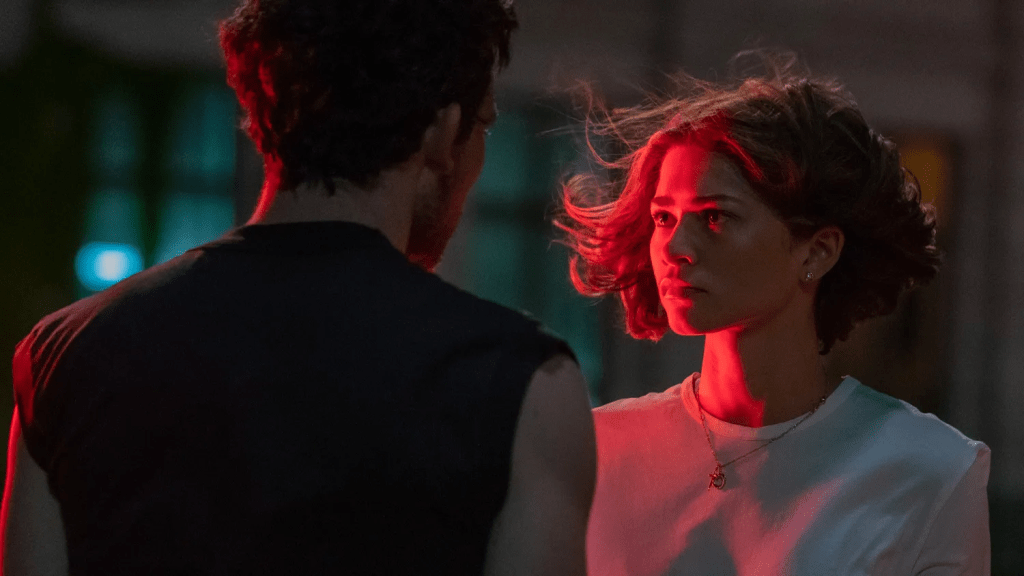
Tennis is a game of intensity, of rapid movement and volleying back and forth for control of the game. Director Luca Guadagnino steeps this exact energy into Challengers, the sweatiest, sexiest-sexless film of the year.
Set in the world of competitive tennis, Challengers follows a trifecta of players: tennis prodigy Tashi (Zendaya) who suffered a career-ending injury in college; Art, Tashi’s husband who competes under her intense coaching; and Patrick, whose career petered out. Presented non-linearly over the course of their respective careers, an intense love triangle emerges, culminating in the titular challenger match between Art and Patrick, where old tensions simmer and boil to the breaking point.
Guadagnino often uses the human body to explore power dynamics; it’s no accident that sweat, blood, and sex feature prominently throughout much of his filmography. Tashi, Art, and Patrick are perfect (and highly entertaining) avatars for this idea, because although there are no real sex-scenes in the film, the palpable tension between all three and the new revelations from scene to scene complicate our understanding of who really has control, and who is being played. Through Guadagnino’s work, we find that vulnerability and power are two sides of the same coin.
2. Anora
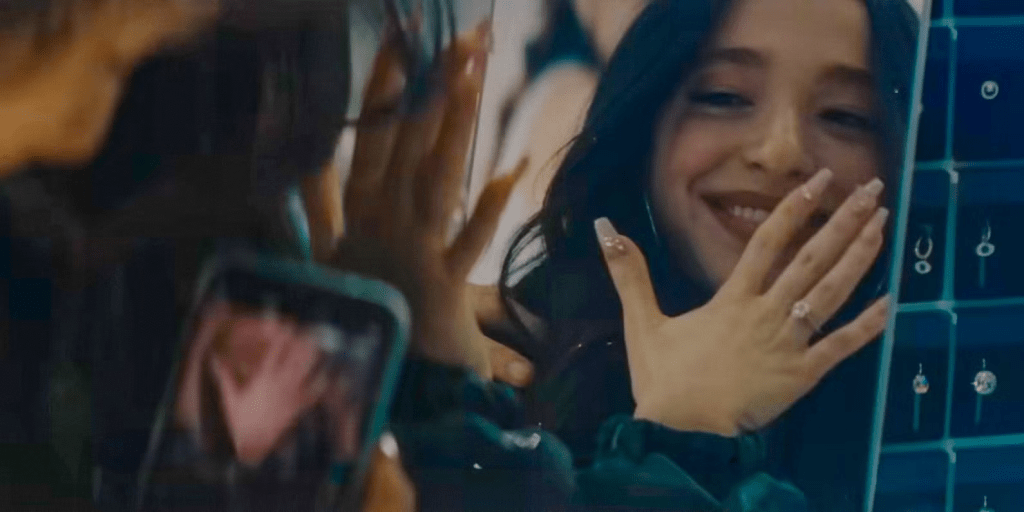
Anora is a modern American fairytale — but not in the way that statement implies. As with The Brutalist, the concept of the “American Dream” is under intense scrutiny in director Sean Baker’s fable about Anora (Mikey Madison), a sex worker in New York who forms an unlikely relationship with Vanya (Mark Eydelshteyn), the son of a wealthy Russian oligarch.
Propelled by Mikey Madison’s dazzling performance (rivaling the spunk of My Cousin Vinny-era Marisa Tomei), Anora beguiles us with its Cinderella-like whirlwind story, the titular Anora (or “Ani” as her friends call her) swept up in the glamorous, carefree world that Vanya represents. But when henchmen employed by Vanya’s father come looking for him, questioning the nature of his relationship with Ani, she feels this escapist fantasy slipping through her fingers and desperately tries to hold onto it — with claws out.
In America, everything is a transaction. Our capitalist society ensures this. And nowhere is that a more damning conceit than in Anora, where meritocracy is dangled in front of Ani like a carrot, another empty promise. In fact, the real promise of America is a grimdark fairytale, and it’s never the princes in the castle who reap the consequences — it’s the would-be Cinderella’s.
1. Dune: Part II
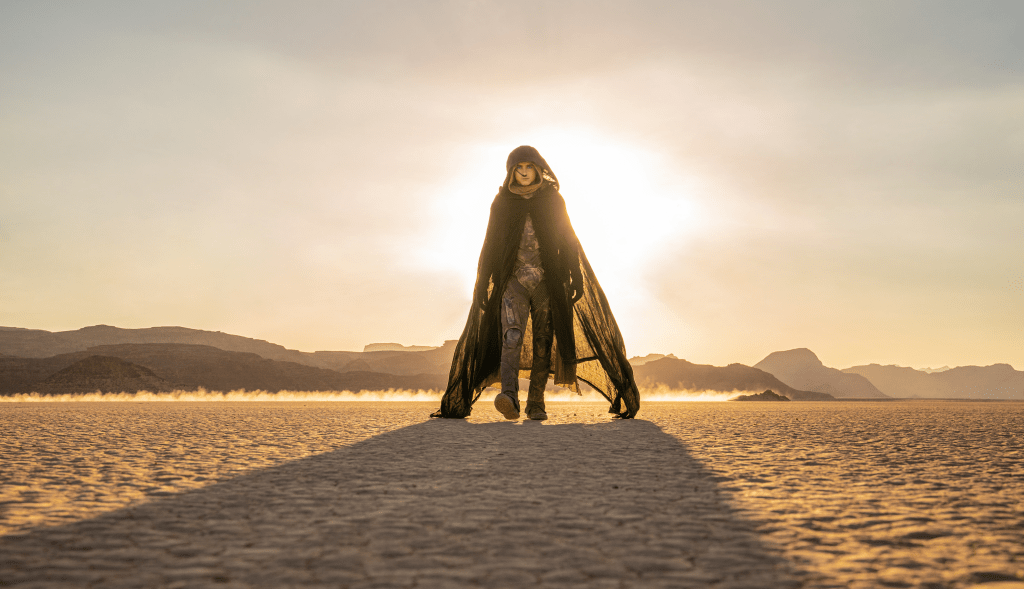
As Nicole Kidman always reminds us in her infamous AMC ad, “We come to this place for magic.”
I watch a lot of films every year, making it a point to view new releases in a theater whenever possible. I’m often impressed, or suprised, or moved by what I see. But it’s truly rare that I watch a film for the first time, knowing that a modern masterpiece is unfolding before my eyes. That I’m watching magic on the big screen, in real-time. Director Denis Villenueve’s Dune: Part II deserves that top-honor.
Picking up where 2021’s Dune left off, Part II continues the story of Paul Atriedes (Timothee Chalamet), who journeys through the treacherous desert of Arrakis with the indigenous Fremen in a quest to regain control of the planet from the villainous House Harkonnen. His connection to Chani (Zendaya), a forward-thinking and fiercely loyal Fremen, will prove to be the focal point of this film-duology, and the tipping point amid the forces that threaten Arrakis.
The Empire Strikes Back comparison is both apt and an oversimplification — the former in that Dune: Part II is grander, darker, and more thought-provoking than its predecessor, but the latter in that the film is a subversion of the traditional Cambellian storytelling that something like Star Wars champions. Dune: Part II embodies everything I look for when I watch a film; the scope, scale, and visual ingenuity is matched only by the contemplative themes that deconstruct the “Chosen One” trope — all of which render the latter half of Frank Herbert’s novel with awe-inspiring results. It also appears to usher in a new era of Hollywood movie stars in Chalamet, Zendaya, Florence Pugh, and Austin Butler, one that signals a bright future for blockbuster storytelling.
 reelifereviews.com